An arteriovenous fistula, created by surgically joining an artery and a vein, is considered the gold standard access point for patients on long-term haemodialysis. But a fistula is not a one-time fix and forget arrangement. Over months and years, it can narrow or develop blockages, which is exactly where AV fistula angioplasty becomes essential. This blog explains why ongoing vascular monitoring matters so much for dialysis patients and what the procedure itself involves.
Why the AV Fistula Is So Important for Dialysis
Dialysis requires a reliable access point capable of handling repeated, high-flow blood removal and return, several times a week, for years. A well-functioning AV fistula provides exactly that, with a lower infection risk and longer lifespan compared to catheters or grafts. Protecting this access point is, in many ways, just as important as the dialysis sessions themselves.
How an AV Fistula Can Develop Problems
- Narrowing, called stenosis, at or near the site where the artery and vein were joined.
- Reduced blood flow, making dialysis sessions less efficient over time.
- Clot formation within the fistula, which can block it entirely if untreated.
- Visible changes such as reduced thrill or pulse felt over the fistula site.
Warning Signs Dialysis Patients Should Watch For
A change in the buzzing or vibrating sensation, known as the thrill, felt over the fistula is often the earliest clue something is wrong. Other signs include longer-than-usual bleeding after needle removal, unusually low blood flow readings during dialysis, or swelling in the arm. Any of these should prompt a prompt check with a vascular surgeon in New Delhi rather than waiting for the next routine session.
What Is AV Fistula Angioplasty?
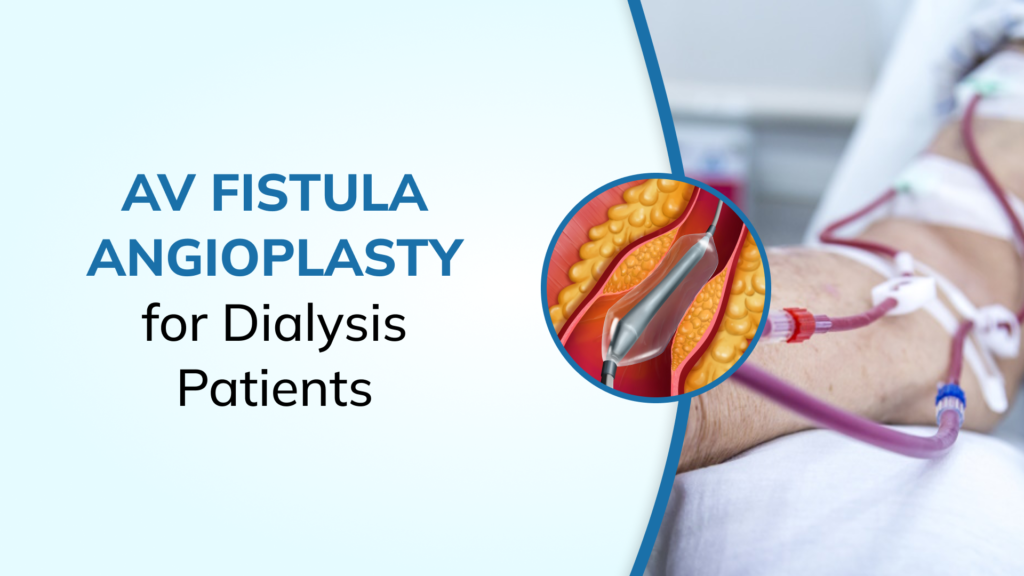
When narrowing is detected, angioplasty offers a minimally invasive solution. A catheter with a small balloon is guided to the narrowed segment of the fistula and inflated to widen it, restoring proper blood flow without the need for open surgical repair. In some cases, a small stent may also be placed to help keep the vessel open for a longer duration.
Why Timing Matters So Much
A narrowed fistula that is treated early with angioplasty has a much better long-term outcome than one left until it clots completely. Once a fistula clots, the treatment becomes more complex, sometimes requiring clot removal procedures or, in worse cases, creation of an entirely new access point. This is why the best vascular surgeon in New Delhi consistently emphasises routine monitoring rather than reactive treatment.
How Often Should Dialysis Patients Get Vascular Check-Ups?
Most nephrology and vascular teams recommend a fistula assessment every few months, even when everything seems to be functioning normally, since narrowing often develops gradually and silently before any obvious symptom appears. Patients who notice any of the warning signs mentioned earlier should be seen sooner rather than waiting for their scheduled check-up.
What to Expect During the Angioplasty Procedure
The procedure is usually performed as a day-care treatment under local anaesthesia, taking roughly thirty to forty-five minutes. Most patients can resume dialysis through the same fistula shortly after, often the very next session, with little to no downtime required for recovery.
Protecting Your Fistula Between Check-Ups
- Avoid sleeping on the arm with the fistula or wearing tight sleeves or jewellery on that side.
- Don’t allow blood pressure checks or blood draws from the fistula arm.
- Report any unusual swelling, coldness, or change in sensation in the hand promptly.
- Keep the access site clean to reduce infection risk between dialysis sessions.
Frequently Asked Questions
Is fistula angioplasty painful?
The procedure is performed under local anaesthesia and is generally well tolerated, with only mild discomfort at the access site.
How long does the benefit of angioplasty last?
This varies between patients, but many fistulas function well for a year or more after a successful angioplasty before any repeat treatment is needed.
Can a fistula be saved once it has clotted completely?
In many cases, yes, through a clot removal procedure combined with angioplasty, though success depends on how quickly treatment is sought after the clot forms.
Will angioplasty affect my dialysis schedule?
No, most patients can resume their usual dialysis schedule through the same fistula shortly after the procedure, often within a day.
How can I tell if my fistula’s thrill has changed?
Your dialysis nurse or technician checks this at every session, but it’s also worth gently feeling the area yourself daily to notice any change in the usual vibration.
Noticed a change in your AV fistula or due for a routine check-up? Speak to an experienced endovascular surgeon in New Delhi before it becomes an emergency. Contact us to book your assessment.