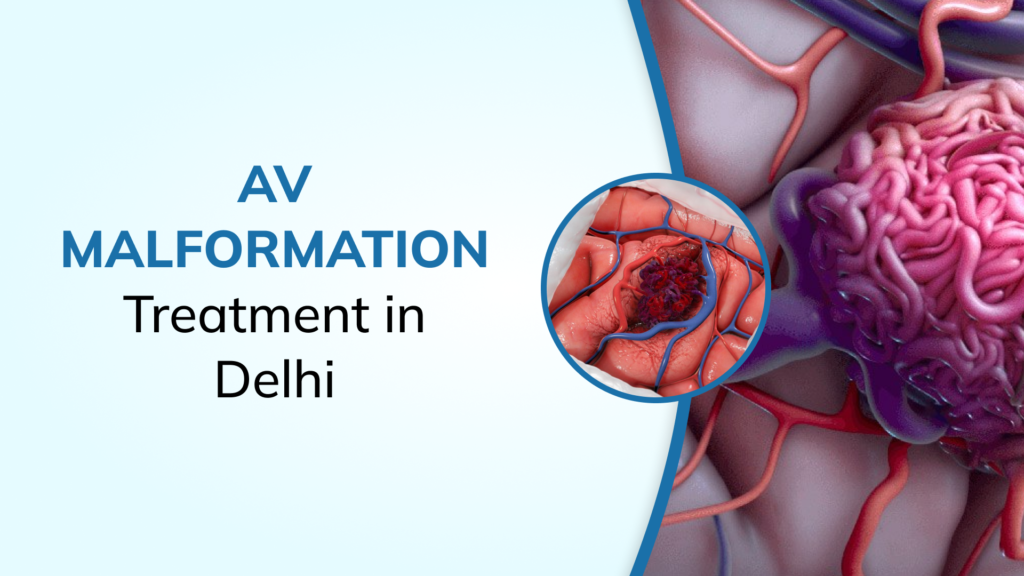
An arteriovenous malformation, commonly called an AV malformation, is an abnormal tangle of blood vessels where arteries connect directly to veins without passing through the normal capillary network. Many patients live with one for years without realising it, until pain, swelling, or skin changes prompt a visit to a vascular surgeon in Delhi. This blog explains how these malformations are diagnosed and the modern, minimally invasive options now available for treating them.
What Exactly Is an AV Malformation?
In a healthy circulatory system, blood flows from arteries through tiny capillaries before reaching veins, allowing oxygen and nutrients to be delivered efficiently to surrounding tissue. In an AV malformation, this capillary network is missing, so high-pressure arterial blood flows directly into low-pressure veins. Over time, this abnormal connection can enlarge, cause the surrounding tissue to be starved of oxygen, and create a visibly swollen, sometimes painful area.
Common Signs and Symptoms
- A visible bulge or swelling that may pulsate or feel warm to touch.
- Skin discolouration, ranging from reddish to bluish patches over the affected area.
- Pain or a heavy, throbbing sensation, especially after standing or activity.
- Slow-healing skin ulcers in more advanced or longstanding cases.
- A faint whooshing sound, called a bruit, sometimes audible near the affected area.
How AV Malformations Are Diagnosed
Diagnosis usually begins with a Doppler ultrasound to assess abnormal blood flow patterns, followed by more detailed imaging such as an MRI or CT angiogram to map the exact size, location, and feeding vessels of the malformation. This mapping step is essential, since it determines which treatment approach will be safest and most effective for that specific malformation.
Modern Treatment Options
Embolization
Embolization is currently the preferred first-line treatment for most AV malformations. A catheter is guided through the blood vessels to the exact site of the abnormal connection, where a specialised embolic agent is delivered to block off the malformation from the inside, cutting off its abnormal blood supply without open surgery.
Sclerotherapy for Smaller Malformations
For smaller or more superficial malformations, a sclerosing agent may be injected directly to close off the abnormal vessels gradually over a series of sessions, often combined with embolization for deeper components.
Surgical Excision in Select Cases
In specific situations, particularly when a malformation is well localised and accessible, surgical removal may be recommended either as a standalone treatment or after embolization has reduced its blood supply, making removal safer with less bleeding.
Why Experience Matters in Endovascular Treatment
AV malformations vary enormously in size, depth, and the pattern of vessels feeding them, which means no two cases are treated identically. Working with the best endovascular surgeon in Delhi ensures the treatment plan is built around your specific imaging findings rather than a generic protocol, reducing the risk of incomplete treatment or recurrence.
What Recovery Looks Like
Embolization and sclerotherapy are typically performed as day-care or short-stay procedures, with most patients resuming light activity within a few days. Some swelling or mild discomfort at the treated site is normal initially and settles over the following weeks. Larger or multi-session treatments may require periodic follow-up imaging to confirm the malformation has been adequately closed off.
Can AV Malformations Be Left Untreated?
Small, symptom-free malformations are sometimes simply monitored. However, malformations that are growing, causing pain, affecting skin integrity, or located near vital structures are generally treated proactively, since delaying care can allow them to enlarge and become more complex to manage later. This is similar to how other vascular conditions like varicose veins tend to progress if ignored for too long.
Frequently Asked Questions
Are AV malformations the same as varicose veins?
No. Varicose veins involve faulty valves in superficial veins, while AV malformations are abnormal direct connections between arteries and veins. They require very different treatment approaches.
Is embolization a permanent solution?
In many cases, yes, though some larger or complex malformations may need more than one session, or occasional follow-up if any residual abnormal flow is detected.
Does treatment require general anaesthesia?
Most embolization procedures are done under local anaesthesia with sedation, though this can vary depending on the malformation’s size and location.
Can AV malformations come back after treatment?
Recurrence is possible, particularly with larger or deeply seated malformations, which is why periodic follow-up imaging is recommended even after successful treatment.
Who should I consult if I notice unusual swelling or skin discolouration?
A consultation with a qualified vascular or endovascular surgeon is the right first step, since early imaging can clarify the cause and prevent unnecessary worry or delay.
Noticed unusual swelling, warmth, or discolouration on your skin? Get an expert opinion from a leading endovascular surgeon in Delhi. Contact us today to schedule your evaluation.