
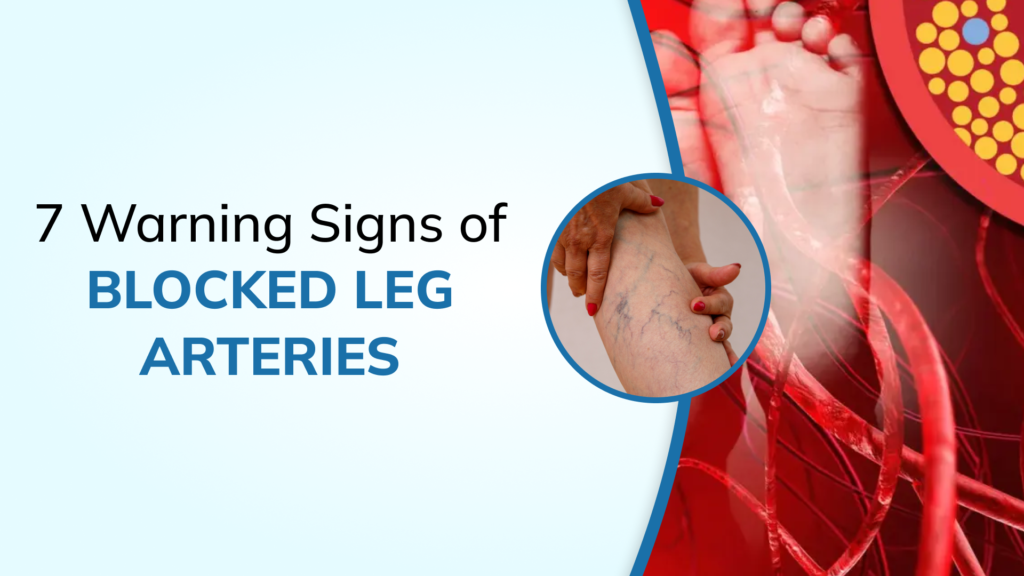
The arteries in your legs are responsible for delivering oxygenated blood from the heart to every tissue from the hip to the tips of the toes. When these arteries begin to narrow or block due to the gradual accumulation of fatty plaques — a process called atherosclerosis — the consequences range from subtle early changes to catastrophic tissue loss if the problem goes undetected for too long. The most frustrating aspect of peripheral arterial disease is that it can quietly progress for years before it declares itself with an obvious symptom, and by the time pain becomes impossible to ignore, significant damage may already have occurred.
Recognising the early signals of blocked leg arteries gives patients and their doctors the opportunity to intervene at a stage when minimally invasive treatment can restore blood flow fully and prevent progression to critical limb ischaemia. As a Best Vascular Surgeon In Delhi, the cases that achieve the best outcomes are those identified at an early warning stage rather than at a vascular emergency.
Warning Sign 1: Leg Pain or Cramping That Starts With Walking and Stops With Rest
This is the most clinically recognised early symptom of peripheral artery disease, called intermittent claudication. When narrowed arteries cannot deliver enough blood to working muscles, those muscles signal their oxygen deficit through pain — typically a cramping or aching in the calf, thigh, or buttock during walking that resolves within minutes of stopping. The consistency of this pattern — same distance, same pain, same resolution — is what distinguishes it from muscle strain or joint problems. A detailed explanation of this symptom pattern and what causes it is available in our article on why leg pain appears only during walking.
Warning Sign 2: Coldness in One Leg or Foot Compared to the Other
A persistent difference in temperature between one foot and the other is a subtle but meaningful early sign of reduced arterial flow on the cooler side. Many patients notice this while putting on shoes or during a bath, and initially attribute it to poor circulation in a vague, non-specific sense. A vascular examination comparing pulses and blood pressure at different levels of both legs can quickly confirm whether an arterial cause is responsible.
Warning Sign 3: Skin Colour Changes in the Legs or Feet
Arterially compromised skin often shows characteristic colour changes. The affected limb may appear pale or even slightly bluish at rest, particularly when the leg is elevated. When the leg is lowered to a dependent position, the skin may develop a dusky reddish-purple discolouration called dependent rubor, which represents the skin’s response to gravity-assisted blood trickle through severely narrowed arteries. These colour changes are visible signs of tissue struggling to receive adequate perfusion.
Warning Sign 4: Slow-Healing Sores or Wounds on the Feet or Toes
A wound on the foot that simply will not heal within the expected timeframe is one of the most serious early warning signs of arterial insufficiency in practice. Without adequate blood flow delivering oxygen, nutrients, and immune cells to the wound site, even a minor abrasion or blister can become a chronic, non-healing ulcer that progressively deepens if arterial supply is not restored. Patients with both PAD and diabetes are at particularly high risk for this complication, and our diabetic foot surgery team in Delhi often works closely with vascular specialists to manage complex cases where both arterial disease and diabetic neuropathy contribute to wound failure.
Warning Sign 5: Hair Loss on the Legs and Changes in Toenail Appearance
Chronic reduced blood flow affects the skin and its appendages in subtle ways that reveal long-standing arterial insufficiency. Hair follicles in the lower leg require adequate circulation to sustain hair growth — their loss below the knee, in the absence of other causes, is a recognised clinical sign of peripheral vascular disease. Similarly, toenails may become thickened, brittle, slow-growing, or discoloured when nail matrix cells are chronically underperfused. These changes develop slowly over months to years and are often present well before pain becomes significant.
Warning Sign 6: Weakness or Heaviness in the Legs During Activity
Some patients with PAD describe their early symptoms not as pain but as a feeling of leg weakness or heaviness that comes on during walking and makes them slow down or stop. This variant of claudication occurs because fatigued, oxygen-deprived muscle fibres lose contractile efficiency before they generate frank pain, and the resulting functional limitation — reduced walking speed, reluctance to climb stairs, preference for lifts — is often dismissed as unfitness or ageing. If you notice you are avoiding activities that involve sustained walking that previously presented no difficulty, it is worth discussing this with a Vascular Surgeon In New Delhi rather than assuming it is simply a sign of getting older.
Warning Sign 7: Burning or Aching Pain in the Feet at Rest, Especially at Night
Rest pain in the foot — particularly a burning sensation at the ball of the foot or toes that worsens when lying down and partially improves when the leg is lowered over the edge of the bed — signals significantly advanced arterial disease. At rest, gravity can no longer assist blood delivery to the foot, and the foot’s limited blood supply is insufficient even for the minimal demands of resting tissue. This symptom represents critical limb ischaemia and is a vascular emergency requiring urgent specialist assessment. Patients who dangle their feet to get relief overnight, or who sleep in a chair because it eases foot pain, should seek same-day referral to an Endovascular Surgeon In Delhi.
Additional Symptoms That May Signal Aortic or Iliac Disease
When arterial blockage involves the aorta or iliac arteries — the larger vessels feeding blood to both legs — symptoms can be bilateral and may include buttock or hip pain during walking, erectile dysfunction in men, and a general sense of lower-body weakness during exertion. Aortic disease, including aortic aneurysm, requires specific diagnostic investigation beyond standard peripheral vascular assessment, and aortic aneurysm treatment is a specialist surgical undertaking distinct from peripheral artery angioplasty.
Why These Signs Are Often Missed or Misattributed
Several features of early peripheral artery disease make it easy to overlook in routine practice. The symptoms develop gradually over months or years, making it difficult for patients to perceive a clear change. Coldness, hair loss, and nail changes are rarely connected to arterial disease without specific vascular training. Claudication is frequently attributed to knee arthritis, muscle strain, or sciatica, especially in older patients who genuinely have those conditions alongside unrecognised PAD. And many patients, particularly those without diabetes, do not consider themselves at risk of arterial disease.
This is why our article on poor blood circulation without diabetes is an important read for patients and caregivers who assume arterial disease is exclusively a diabetic complication — it is not, and missing PAD in a non-diabetic patient carries exactly the same risk of progression to critical limb ischaemia.
Who Should Be Screened Even Without Symptoms
Given that a substantial proportion of patients with significant peripheral artery disease have no walking-related symptoms — either because they are sedentary or because their disease has developed collateral pathways that partially compensate — targeted screening of high-risk individuals is an important part of vascular preventive medicine:
- All patients over 65 with a history of smoking — even if they quit years ago.
- Patients of any age with both diabetes and one additional cardiovascular risk factor such as hypertension or high cholesterol.
- Patients with a family history of peripheral vascular disease, heart attack, or stroke before the age of 60.
- Patients with chronic kidney disease, regardless of their diabetes status.
- Any patient being evaluated for coronary artery disease or carotid artery disease, since PAD frequently coexists.
Screening in these groups using an Ankle Brachial Index is simple, non-invasive, and takes approximately fifteen minutes. It can identify disease years before symptoms appear, allowing early medical management to slow progression at its most modifiable stage.
How Modifying Risk Factors Changes the Disease Trajectory
Identifying blocked leg arteries early is only valuable if it prompts meaningful action on the risk factors driving continued plaque formation. Smoking cessation is the single most impactful intervention available — patients who stop smoking after a PAD diagnosis slow disease progression more effectively than with any medication currently available. Statin therapy for cholesterol management, antihypertensive therapy for blood pressure control, and antiplatelet drugs to reduce clot risk all contribute to stabilising plaque and reducing cardiovascular event rates.
For patients with diabetes, optimising glucose control reduces microvascular disease risk and supports wound healing capacity — a critical consideration given how quickly arterially compromised diabetic feet can progress from a minor wound to a limb-threatening problem when circulation is already impaired.
What a Vascular Assessment Involves
A comprehensive peripheral vascular assessment is non-invasive, painless, and can typically be completed in a single consultation. It includes:
- Pulse palpation at multiple levels — femoral, popliteal, dorsalis pedis, and posterior tibial.
- Ankle Brachial Index (ABI) measurement — a simple pressure cuff comparison between ankle and arm.
- Duplex arterial ultrasound — imaging the arteries to locate narrowings and assess flow velocity.
- CT or MR Angiography when intervention is being planned — providing a precise anatomical map of disease.
For a full explanation of the treatment options available once PAD is confirmed — including angioplasty, stenting, and surgical bypass — our article on how long leg angioplasty lasts and what patients can expect is a useful next read.
Frequently Asked Questions
Can blocked leg arteries be prevented?
While genetic predisposition cannot be changed, the modifiable risk factors — smoking, poorly controlled blood pressure, elevated LDL cholesterol, uncontrolled diabetes, and physical inactivity — all significantly accelerate plaque formation and are directly amenable to lifestyle and medical intervention.
At what age should I start worrying about blocked leg arteries?
Peripheral artery disease most commonly presents in patients over 60, but smokers and diabetic patients can develop significant disease a decade or more earlier. Anyone over 50 with cardiovascular risk factors should consider periodic Ankle Brachial Index screening.
If I have one blocked leg artery, should I worry about my heart arteries too?
Absolutely. Atherosclerosis is a systemic disease. Peripheral artery disease is an independent risk factor for heart attack and stroke, and patients with confirmed PAD should have their coronary risk assessed and managed alongside their peripheral disease.
Is it possible to have completely blocked arteries in the leg without any symptoms?
Yes. PAD can be entirely asymptomatic in its early stages, particularly in sedentary individuals who never walk far enough to trigger claudication. Screening using the Ankle Brachial Index is the only reliable way to detect asymptomatic disease.
Which doctor treats blocked leg arteries?
A vascular surgeon or endovascular specialist is the appropriate physician for diagnosis and treatment of blocked leg arteries. Our guide on which doctor to consult for leg pain and arterial problems explains the difference between specialists and helps patients navigate the right referral pathway.
Conclusion
Blocked arteries in the legs announce themselves through seven recognisable, observable signals long before they reach a crisis stage. Leg pain that follows a walking-and-rest pattern, unexplained skin coldness, colour changes, slow-healing wounds, hair and nail changes, functional leg weakness, and night-time foot pain are all legitimate reasons to seek vascular assessment, not explanations to defer for another few months. The earlier peripheral artery disease is identified, the simpler and more effective the treatment, and the lower the risk of reaching a stage where limb salvage rather than simple restoration of walking becomes the goal.
Do Not Ignore Your Legs’ Warning Signals
If you recognise any of the seven signs described above, book a vascular assessment with our team today. The Best Vascular Surgeon In New Delhi offers comprehensive peripheral arterial assessment in a single appointment, with same-day duplex ultrasound available for urgent presentations.