Most people are familiar with heart surgery or orthopaedic surgery, but vascular and endovascular surgery — the speciality that deals with the body’s network of arteries, veins, and lymphatic vessels — remains poorly understood despite being one of the most critical areas of modern medicine. Conditions affecting blood vessels can silently develop for years before becoming life-threatening emergencies. Aortic aneurysms can rupture without warning. Deep vein thrombosis can release clots that travel to the lungs. AV malformations and AV fistulas can cause progressive organ damage if not corrected. Understanding these conditions and the minimally invasive endovascular techniques now available to treat them is important for every patient and family member. This blog explains these complex conditions in clear language and describes the advanced treatment options offered by Dr. Nikhil Chaudhari, widely recognised as the best vascular and endovascular surgeon in Delhi.
What Is Endovascular Surgery and Why Does It Change Everything?
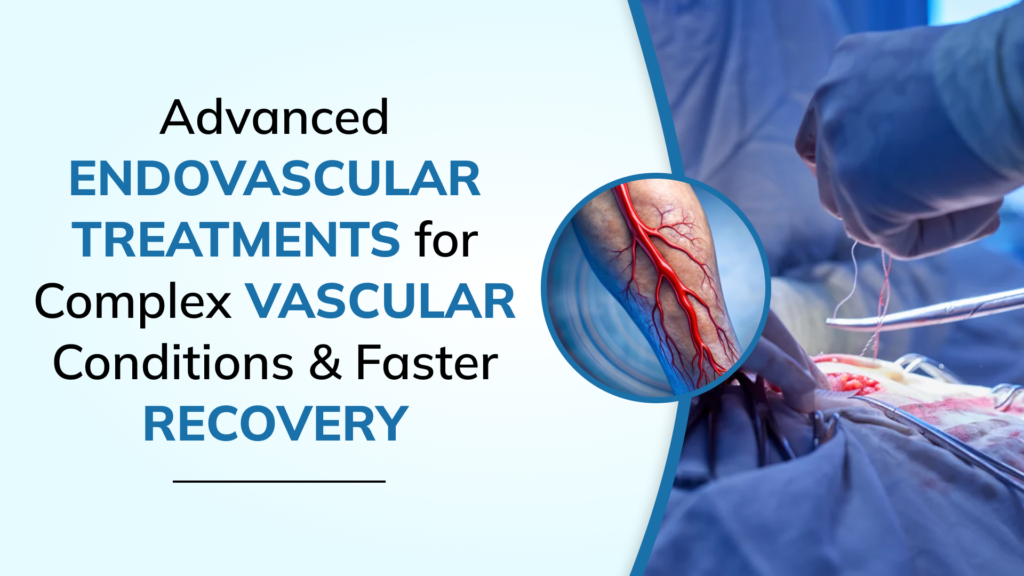
Traditional open vascular surgery involves making large incisions to access and repair blood vessels directly. While effective, open surgery carries significant risks — blood loss, infection, prolonged anaesthesia, and lengthy recovery periods, particularly challenging for elderly patients or those with multiple comorbidities. Endovascular surgery is a fundamentally different approach. Instead of opening the body, the surgeon works entirely from within the blood vessels themselves. Using a small puncture — usually in the groin, wrist, or arm — the surgeon introduces thin, flexible tubes called catheters, guided in real time by X-ray imaging (fluoroscopy). Through these catheters, stents, coils, balloons, clot-removing devices, and other tools can be delivered precisely to the affected vessel anywhere in the body. The result is the same therapeutic benefit as open surgery, achieved with dramatically reduced trauma, faster recovery, and lower complication rates. Dr. Nikhil Chaudhari, the #1 vascular surgeon in Delhi, has performed hundreds of these procedures, bringing international-standard endovascular expertise to patients across Delhi NCR and beyond.
Aortic Aneurysm: A Silent Threat That Demands Expert Care
The aorta is the largest artery in the human body, carrying oxygen-rich blood from the heart to the rest of the body. An aortic aneurysm is an abnormal, localised ballooning or bulging of the aortic wall caused by weakness in the vessel. Aneurysms can develop in the thoracic aorta (in the chest) or the abdominal aorta (in the abdomen), and they are particularly dangerous because they cause no symptoms in their early stages. Many are discovered incidentally during imaging done for another reason. As an aneurysm grows, the risk of rupture increases dramatically — and aortic rupture carries a mortality rate of over 80% if not treated immediately. The conventional treatment for aortic aneurysm has historically been open surgical repair — a major operation requiring general anaesthesia, a large abdominal incision, and weeks of hospital recovery. The endovascular alternative, known as EVAR (Endovascular Aortic Repair), involves threading a stent-graft through small access points in the groin arteries and deploying it within the aneurysm to reinforce the weakened vessel wall, effectively excluding the aneurysm from circulation. This approach results in significantly shorter hospital stays, faster return to normal activity, and substantially lower perioperative risk. For patients in Delhi requiring aortic aneurysm treatment performed by a truly skilled endovascular specialist, Dr. Nikhil Chaudhari provides comprehensive evaluation, planning, and execution of EVAR and related procedures. To understand your specific situation and treatment options, contact the clinic for a detailed consultation.
AV Malformation: When Blood Vessels Develop Abnormally
An arteriovenous (AV) malformation is an abnormal tangle of blood vessels that connects arteries directly to veins, bypassing the normal capillary system that regulates blood flow. AV malformations can occur in the brain, spinal cord, liver, kidneys, lungs, or extremities. They are typically congenital — present from birth — and may remain asymptomatic for years or even decades. However, when symptoms do develop, they can be dramatic. Depending on the location, AV malformations can cause seizures, headaches, pain, swelling, skin changes, bleeding, or in the case of cerebral or spinal AV malformations, catastrophic haemorrhage. The management of AV malformation treatment requires specialised expertise because these lesions can be highly complex, involving multiple feeding arteries and draining veins in intricate configurations. Endovascular embolisation — the delivery of materials through catheters to intentionally block blood flow through the abnormal vessel tangle — is a cornerstone of AV malformation management. Depending on the location and complexity of the lesion, embolisation may be performed as a standalone treatment or in combination with surgery or stereotactic radiosurgery. Dr. Nikhil Chaudhari’s expertise as an endovascular surgeon in Delhi makes him one of the most qualified specialists in the region for the management of these complex vascular anomalies.
AV Fistula Angioplasty: Protecting the Lifeline of Dialysis Patients
An arteriovenous (AV) fistula is a surgically created connection between an artery and a vein, most commonly in the forearm or upper arm. For patients with chronic kidney disease (CKD) who require regular haemodialysis, the AV fistula is their lifeline — it provides the high-flow blood access needed to connect the patient to the dialysis machine. Without a functioning AV fistula, dialysis cannot be performed effectively, and the patient’s life is at risk. Over time, AV fistulas can develop problems — most commonly stenosis (narrowing) at various points along the fistula or the outflow vein, which reduces blood flow and can lead to fistula failure. AV fistula angioplasty is the procedure used to treat these stenoses. Using a catheter introduced through a small puncture, a balloon is advanced to the narrowed segment and inflated to restore normal vessel diameter. In some cases, a stent may also be placed to maintain patency. This procedure is performed under local anaesthesia with mild sedation, requires no surgical incision, and takes between 30 minutes and an hour. The patient can typically return home the same day, with the fistula immediately restored to functional blood flows. For dialysis patients in Delhi NCR whose fistula is underperforming, Dr. Nikhil Chaudhari offers expert AV fistula angioplasty as part of a comprehensive vascular access management programme. To schedule an assessment, visit the contact page.
Clot Suction for DVT: Getting Ahead of Post-Thrombotic Syndrome
Deep vein thrombosis (DVT) — the formation of blood clots in the deep veins, most commonly of the legs — is a serious and potentially life-threatening condition. The immediate dangers include pulmonary embolism, where a piece of the clot breaks off and travels to the lungs, which can be fatal. However, even when the acute DVT is managed and the patient survives, many patients go on to develop post-thrombotic syndrome (PTS) — a chronic condition characterised by persistent leg pain, swelling, skin discolouration, ulceration, and significantly reduced quality of life. Post-thrombotic syndrome develops because the clot damages the venous valves inside the leg veins, and also because residual clot obstructs venous drainage even after partial resolution. Standard anticoagulation therapy dissolves clots slowly — over weeks to months — allowing significant valve damage to accumulate in the interim. Clot suction for DVT, also known as mechanical thrombectomy or pharmacomechanical catheter-directed thrombolysis, is an advanced endovascular technique that removes or dissolves the clot far more rapidly than anticoagulation alone. A specialised catheter is introduced into the thrombosed vein and used to mechanically break up and aspirate (suction) the clot, sometimes in combination with the local delivery of thrombolytic drugs. The result is a dramatic reduction in clot burden within hours, preservation of venous valve function, and significantly lower rates of post-thrombotic syndrome. For patients in Delhi with extensive or iliofemoral DVT — clots extending into the thigh or pelvic veins — this approach offers outcomes that standard anticoagulation alone simply cannot match. Dr. Nikhil Chaudhari is one of the most experienced DVT specialists in Delhi performing these advanced interventions. Patients who have been diagnosed with DVT and are wondering about the most appropriate treatment should seek specialist evaluation promptly, as the window for optimal clot removal is typically within the first two weeks of symptom onset.
Genicular Artery Embolization for Knee Pain: A Remarkable Innovation
One of the most exciting recent developments in interventional vascular medicine is the use of embolization — a technique traditionally reserved for tumours and vascular malformations — to treat knee pain caused by osteoarthritis. Genicular Artery Embolization (GAE) is a minimally invasive procedure in which microspheres are delivered through a catheter into the small arteries supplying the knee joint’s synovial lining. In osteoarthritis, abnormal blood vessel proliferation in the synovium contributes significantly to knee pain and inflammation. By selectively reducing blood flow to these abnormal vessels, GAE reduces the inflammatory mediators driving pain — often achieving 50% to 80% improvement in pain scores. The procedure takes approximately one to two hours, is performed under local anaesthesia, and requires no hospital admission. Patients who are not surgical candidates, who wish to delay knee replacement, or who have failed other conservative treatments are particularly strong candidates. To learn more about this innovative approach to knee pain treatment in Delhi, consult Dr. Nikhil Chaudhari, who is among the few vascular surgeons in Delhi performing Genicular Artery Embolization with documented clinical outcomes.
Varicose Veins, Diabetic Foot, and Gangrene: Comprehensive Vascular Care
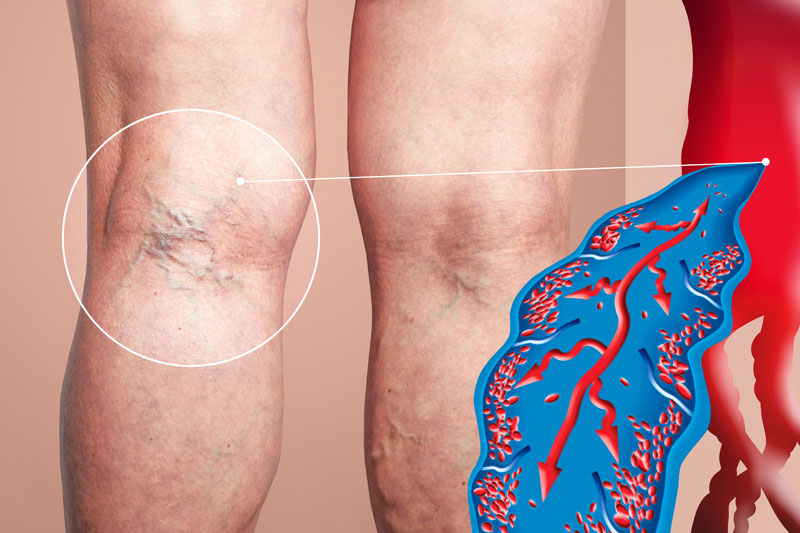
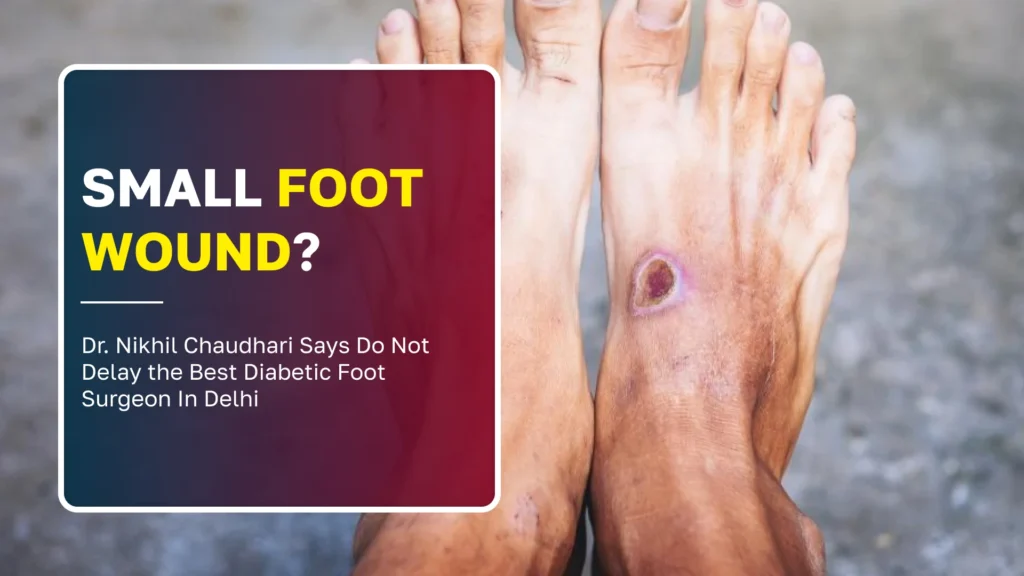
Beyond the complex conditions described above, Dr. Nikhil Chaudhari’s practice provides expert care for the full range of vascular conditions. Patients with varicose veins — the twisted, bulging veins visible in the legs — receive modern endovascular treatments including endovenous laser ablation and radiofrequency ablation, which eliminate diseased veins without surgery or prolonged recovery. For diabetic patients experiencing foot complications — ulcers, poor wound healing, infection, and threatened limb loss — Dr. Chaudhari’s expertise as the best diabetic foot surgeon in Delhi provides limb-salvage interventions including angioplasty and stenting of diseased foot arteries that restore blood flow and allow wounds to heal. In cases where gangrene has already developed, early specialist intervention by a gangrene specialist doctor in Delhi can mean the difference between limb salvage and amputation. Reaching a skilled vascular surgeon early is always the most important factor in outcome.
Why Patients Across Delhi NCR Choose Dr. Nikhil Chaudhari
Vascular conditions require a specialist who combines deep technical skill in both open surgery and endovascular techniques, sound clinical judgement in choosing the right approach for each individual patient, and the ability to manage complex cases that involve multiple comorbidities. Dr. Nikhil Chaudhari brings all of these qualities to his practice, supported by a team and facility capable of handling both elective and emergency vascular cases. Whether you or a family member is dealing with a newly discovered aortic aneurysm, a DVT that needs expert management, a failing dialysis fistula, or any other vascular condition, the first step is a thorough consultation with a specialist who has the experience and capability to provide the full range of treatment options. Contact the clinic today to schedule your evaluation with the best vascular surgeon in New Delhi and take the first step toward the right treatment.